
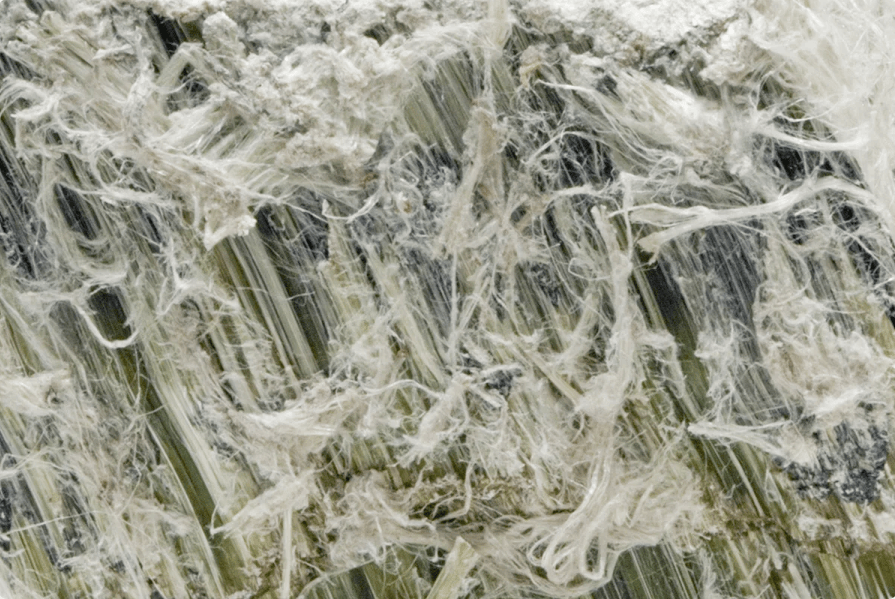
Our world is full of naturally occurring minerals and metals that have proven useful as technology advances. Lithium mined from Africa is used in batteries for electronics and vehicles; and quartz is mined for its use in glass and watches. Other metals and minerals have all been vital for some reason or another. However, one naturally occurring mineral was shown to be nearly 100% fire proof, and was 6 times stronger than steel at a fraction of the weight. These properties meant this mineral was put into everything, until 30 years of research told the world it’s a direct cause of cancer. That material is asbestos and this is the story of why it’s so dangerous.
What Is Asbestos
Asbestos is a naturally occurring mineral fiber most commonly found in rocks and soil. If you’ve ever dug in the ground or moved some rock, you’ve probably encountered some naturally occurring asbestos. Fibers of asbestos can be broken down into two categories. Chrysotile, otherwise known as Serpentine or White asbestos, and Amphibole asbestos.
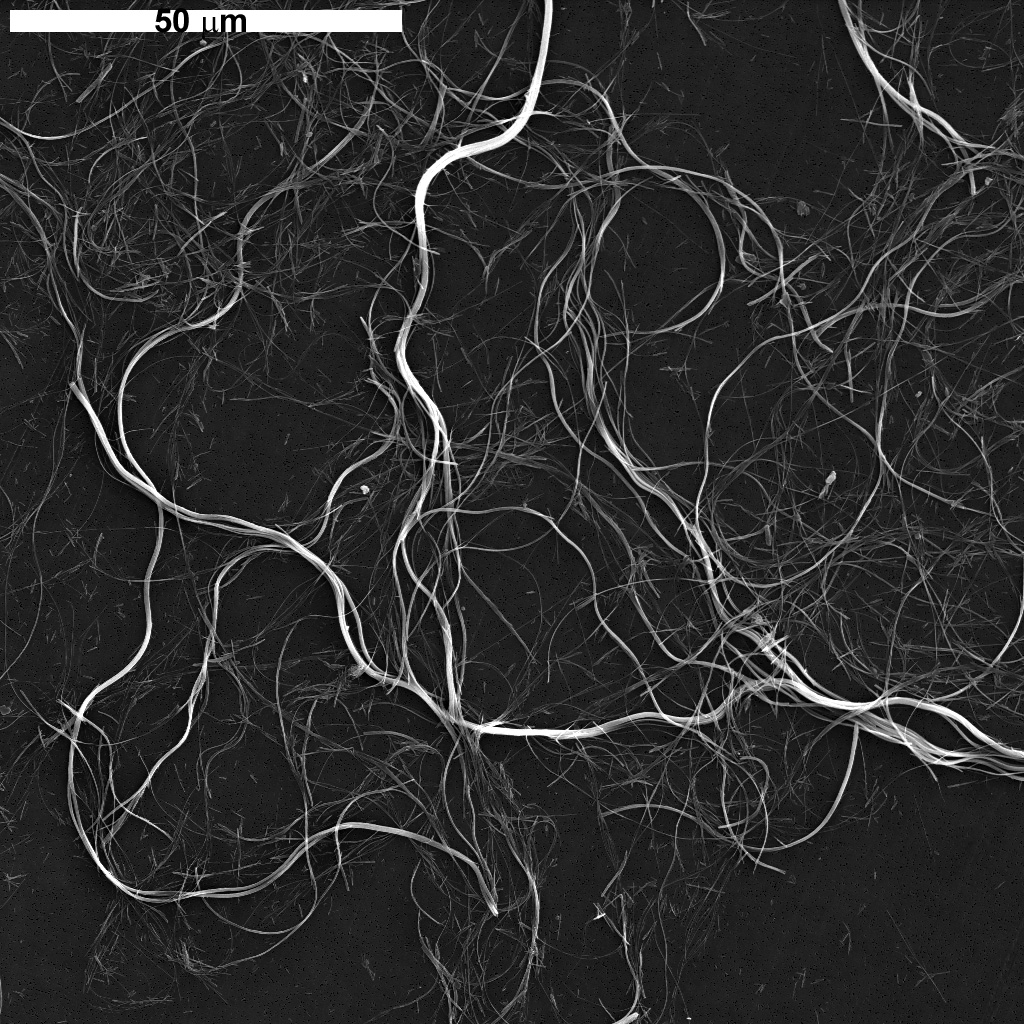
Chrysotile is the only type of asbestos in the Serpentine family and accounts for nearly 95% of the asbestos used. Fibers often appear like woven or matted threads. In fact, the moves “The Wizard of Oz” (1939), “Holiday Inn” (1942), “White Christmas” (1954) and “It’s A Wonderful Life” (1946) all used pure chrysotile asbestos for the snow. Under a microscope, chrysotile fibers often look like wavy serpentine structures.
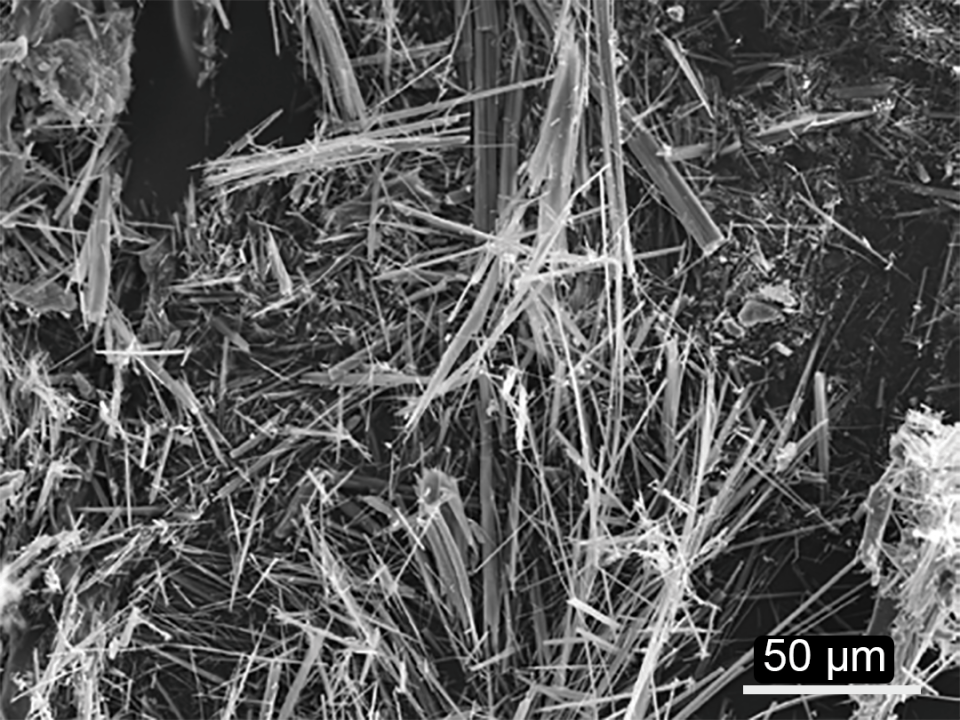
Amphibole asbestos appears more needle like under a high powered microscope. There are 5 different types of Amphiboles: amosite, crocidolite, tremolite, anthophyllite and actinolite. Overall, exposure to Amphibole asbestos is more dangerous than exposure to Serpentine asbestos. Fortunately, Amphibole asbestos is less common.
The History and Discovery
Asbestos has been around since early civilization. Ancient Egyptians would wrap mummies in asbestos cloth. In Medieval times, asbestos was used for cleaning, protect cremated remains and as decorations in castles. However, asbestos use exploded in the mid-19th century.
America was in the height of the industrial, cities were being developed and workers were flocking to high rises in New York, Chicago and other metropolitan areas. Higher population and closer buildings is a recipe for disaster, especially regarding fire potential.
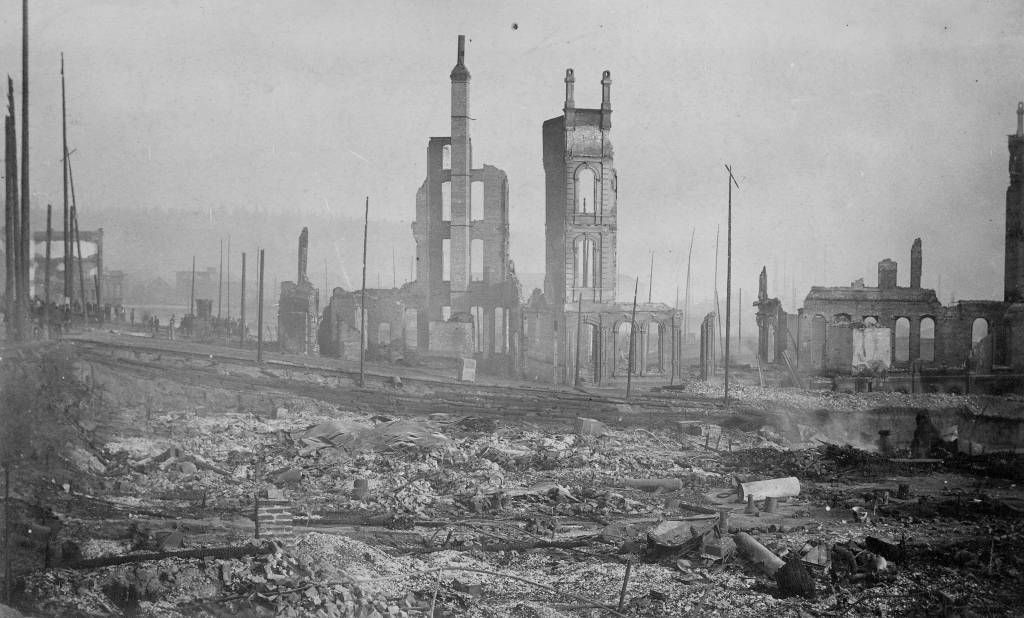
A fire would start in one building. Embers would travel to the roof of an adjoining building. The ember would catch the next building on fire, and the cycle repeats. Major fires in New York, Seattle and Chicago highlight the need for building codes to change.
Leading that change was a man named Henry Ward Johns, the founder of Johns-Manville Company. John-Manville made buildings supplies, and Johns knew if he could develop a fireproof roofing shingle, he would have a great advantage in the building market. Then one night in 1858, in his New York City apartment, he discovered the fireproof properties of anthophyllite asbestos. Soon after they began using it in roofing to produce a fireproof roofing shingle.
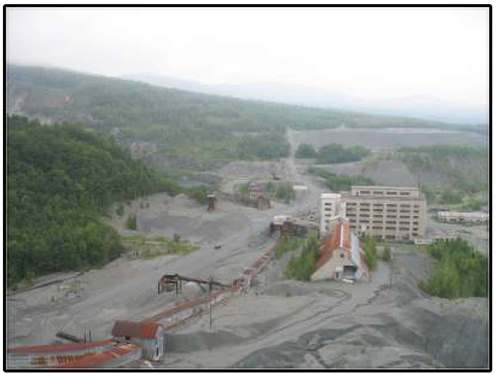
The sudden demand for asbestos meant a need for commercial mining. Fibers were mined from Quebec, Canada, Vermont, United States and Russia. Fibers were then sent off to various manufactures to use in building materials. The last asbestos mine in North America closed in 2011. Mines in Russia and Asia are still active today.
Where Asbestos Is Found
Starting in 1880, asbestos was seen as a miracle product and in use until the mid 1970s. The main draw for builders and manufacturers was asbestos’s flame resistant properties. Anything that needed protection from fire was manufactured with asbestos. It was a self fulfilling market. Homeowners and customers did not want to lose their possessions to a fire, and builders wanted to ensure their material was fireproof. Customers were told it was the best, and builders wanted to use it.
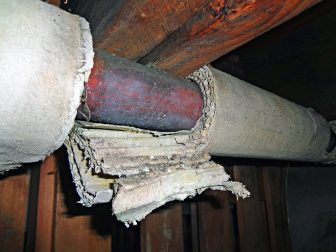
In industrial buildings, steam and condensate lines were extremely hot. Asbestos was the insulator used to contain the heat. In commercial buildings, fire blankets made with woven asbestos were hung at every door and stairwell. Even fire suits were manufactured with asbestos.
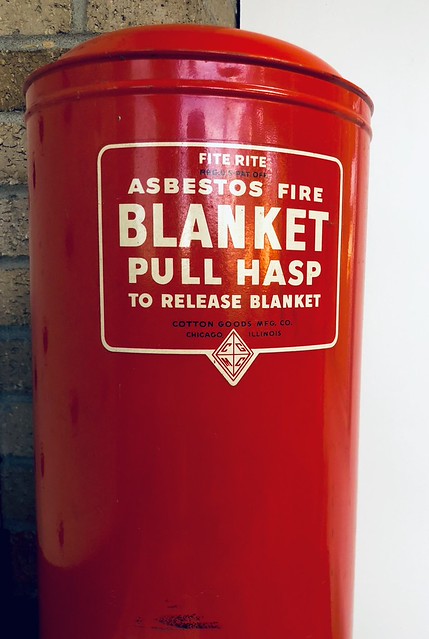
There wasn’t an industry in the world that didn’t use asbestos. Auto manufactures used asbestos in brake systems. Everything from furniture, carpeting, flooring and clothing all contained asbestos. Believe it or not, books and cigarettes were also made with asbestos. As for Henry Ward Johns, his company Johns-Manville would go on to be the worlds largest miner, processor, manufacturer and supplier of asbestos fibers.
As Johns-Manville’s success is taking off, another operation is growing in Libby Montana. In 1881, gold miners discovered vermiculite, which is a valuable mineral used for insulation. By the 1900s, the mine in Libby Montana was producing nearly 80% of the worlds vermiculite and insulation.
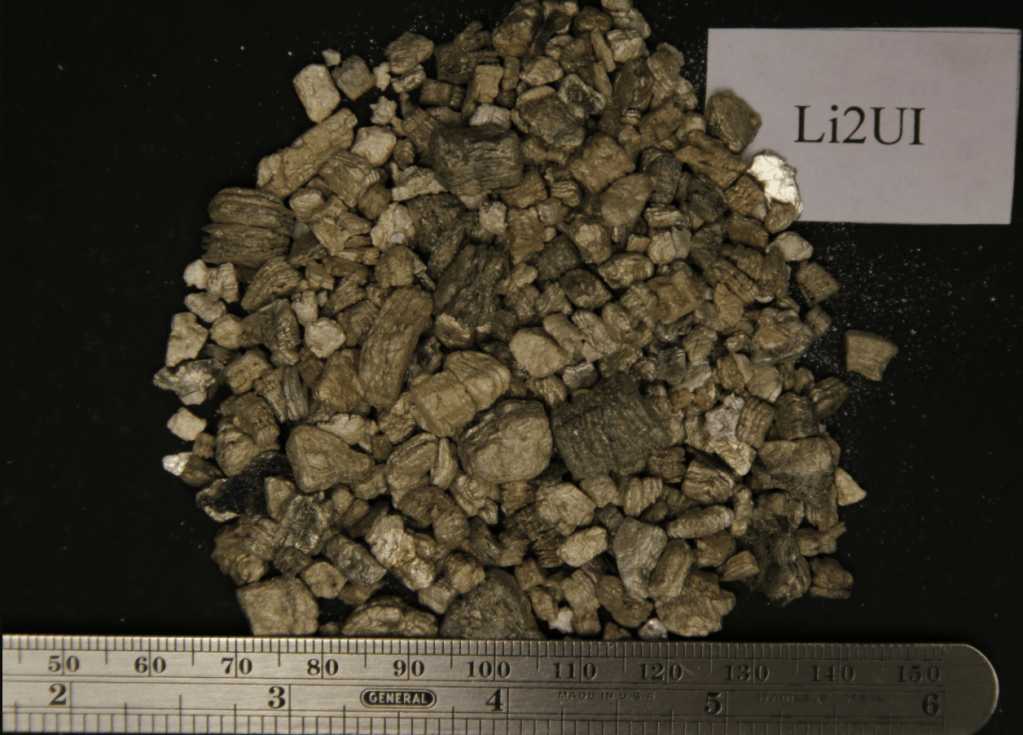
Johns-Manville mined, produced and distributed the raw asbestos fibers, Libby Montana produced the asbestos vermiculite for commercial insulation and Raybestos was the leading asbestos brake supplier for the automotive industry. Together, these companies controlled the asbestos market. Since they controlled the market, they controlled the availability of material. However, fast forward to the 1980s and government pressure was heating up and consumers were beginning to make a connection between asbestos and adverse health effects.
Health Effects and Cover Ups
Research surrounding asbestos dates back to the 1900s. Doctors noticed a link between those working with asbestos and adverse health effects. Nellie Kershaw was a spinner for the English textile company Turner & Newall (formally Turner Brothers Asbestos). Turner Brothers Asbestos took asbestos fibers and wove them into clothing. Then on March 14th, 1924, Nellie Kershaw passed away at the age of 33. She was exposed to asbestos fibers for more than 8 hours a day for nearly 5 years. During her autopsy, doctors found scaring and asbestos fibers deep inside her lungs. Her official cause of death was pulmonary asbestosis. Nellie became the first recorded death due to occupational asbestos exposure.
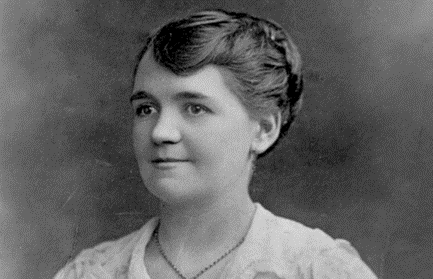
Her employer took no liability and did not help with funeral costs. They believed it would set a dangerous standard and feared other families of deceased employees would begin looking for compensation. However, the link between asbestos and health effects had been made.
Even before Nellie’s death in 1924, doctors began noticing a link between those who worked with asbestos and chronic health effects. In the same year as Nellie’s death William Cooke published the first medical paper linking asbestos exposure to mesothelioma and asbestosis. By 1929 Dr. Anthony Lanza, who was the assistant medical director for MetLife Insurance began to further investigate health effects related to asbestos.
All this negative medical publicity began to negatively effect the asbestos industry. In 1932, in response to the negative research, Johns-Manville paid a lab to conduct a study regarding asbestos exposure. The data collected further supported a link between asbestos and chronic health effects. However, Johns-Manville management did not want to release the data to the public. The decided to only release part of the study and state there was no connection between asbestos and health effects. Johns-Manville CEOs were caught saying in a letter “The less said about asbestos, the better off we are.” This suggests John-Manville were aware of the risks related to asbestos exposure, but chose not to act. In Libby, Montana the mine went as far as to have their medical clinic onsite, who would lie on patients medical files, showing no damage to employees lungs, when in reality there was. Johnson & Johnson, Talc America did something similar in the 1970s, covering up studies hiding the dangers of cancer causing chemicals in their products.
In the U.K, parliament began to consider legislative action against asbestos in attempts to regulate exposure and protect workers and the public. However, Turner Brothers Asbestos lobbied against the legislation and it failed to pass. Into the 1940s and 1950s the asbestos industry exploded. Johns-Manville saw record sales, Raybestos was producing brakes for every major automotive manufacturer, the mine in Libby was producing record amounts of vermiculite contaminated with asbestos. Even though laws surrounding asbestos regulation had failed, the public was still warry of asbestos. In response, the industry paid for and released positive videos, explaining how asbestos was safe and how it was all around us.
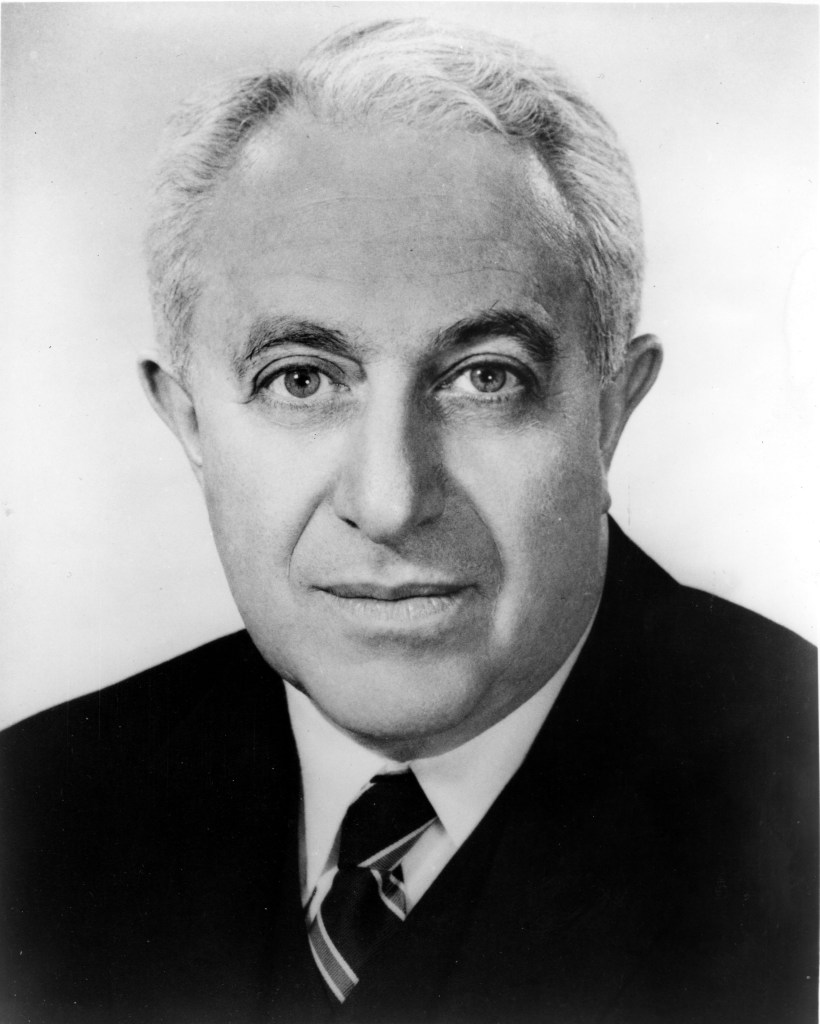
Then, in 1962 Irving Selikoff and his team published the first conclusive link between asbestos and mesothelioma. In 1950, Selikoff was running a general medicine clinic in Paterson, New Jersey, when the Asbestos Workers Union asked him to add his clinic to their list of approved locations. He agreed and began seeing workers who were exposed to asbestos. Shortly after, business at the practice picked up. Over the next few years more patients were diagnosed with mesothelioma and all had been exposed to asbestos from the Long Beach Naval Shipyard.
Selikoff was aware of the now hundreds of papers related to asbestos and various health effects and his study with his own patients only furthered the link. He noted that even 30 years after an asbestos exposure, patients still could develop health problems. Selikoff also noted how asbestos behaved in the body. Even after the individual is removed from the asbestos exposure, the body is unable to heal and long term repeated exposure put workers at the greatest risk.
In 1970 the Occupational Safety And Health Administration (OSHA) was founded. Selikoff and his team brough their research to OSHA and began to advocate for exposure limits. In 1971 the Environmental Protection Agency (EPA) classified asbestos as a known carcinogen and OSHA enacted the first exposure limits for asbestos. Without the work of Irving Selikoff and the countless doctors before him, regulations surrounding asbestos may not exist.
Removing From Everyday Life
After 1971, regulators began to control the asbestos industry. Lawsuits were filed against Johns-Manville, the mine in Libby Montana and other companies in the asbestos industry. Trust funds were created to help those exposed and who were suffering from health effects related to asbestos. The EPA, OSHA and other government agencies began to issue guidance on how to deal with products containing asbestos, such as vehicle brakes, insulation and sheetrock.
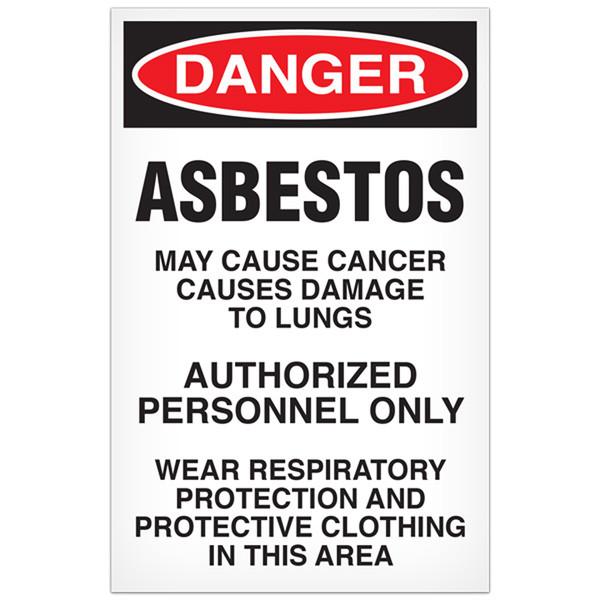
As restrictions tightened, agencies began work to remove asbestos from homes and commercial facilities. Procedures centered around keeping asbestos fibers contained and respirators to keep them out of the lungs of workers. Today, there is an entire 40-hour course dedicated to learning how to control exposure to asbestos, and being able to work with it. However, there is one shortcoming with all the regulation surrounding asbestos.
In 2024 the EPA banned the use of Chrysotile asbestos in building materials, however, there was no restrictions on imports containing asbestos. Products coming into the U.S may not be flagged as containing asbestos. Those that are flagged likely have different markings that what would be expected from a U.S manufacturer.
Asbestos isn’t found in modern day building materials, but it can still be purchased and imported. As recently as 2021, commercial truck brakes and clutches were still being produced with asbestos. Some fire resistant clothing and insulation still contains asbestos. Asbestos is also used in chemical plants to help contain reactions and isolate different products.
Conclusions
Asbestos occurs naturally in the environment. Areas like the deserts of California, Nevada and Utah have higher background asbestos levels than anywhere else in the United States. Despite it’s natural origins; asbestos is one of the most tightly controlled products in the U.S. However, other nations do not have those same controls and asbestos products are not as tightly controlled as one may think.
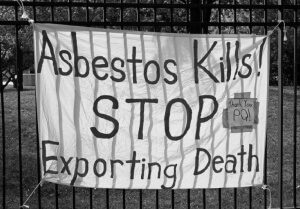
Russia still operates their asbestos mines, and companies like Johns-Manville are still around today. Asbestos was mined in North America until 2011 and Brazil is still one of the largest exporters of asbestos. Asbestos imports are hard to track since markings could vary between countries, and testing each import isn’t practical.
The entire asbestos industry survived on keeping the health risks a secret. Workers were told not to ask questions and were sacrificed in exchange for profits. Unfortunately an entire generation of workers and their families have to suffer the effects of asbestos exposure. The latency period for asbestos exposure is 30 years, which means more cases will be reported. Luckily, the health effects are well documents and there are plenty of resources available to help those affected by asbestos exposure. With the knowledge we have today, and the improved worker protection, this deadly product will be a thing of the past, and remain confined to nature.
References
- https://www.scientificamerican.com/article/how-dangerous-is-asbestos/
- https://www.epa.gov/asbestos/learn-about-asbestos
- https://www.asbestos.com/asbestos/types/
- https://hendersonenvironmental.co.uk/the-wizard-of-oz-and-asbestos-a-harmful-hollywood-history/
- https://www.simmonsfirm.com/blog/history-of-asbestos-in-the-industrial-age/
- https://www.mesothelioma.uk.com/first-asbestosis-death-registered-100-years-ago/
- https://www.asbestos.com/featured-stories/cover-up/
- https://www.asbestos.com/products/
- https://www.simmonsfirm.com/mesothelioma/asbestos-exposure/products/
- Chemscope Asbestos Abatement Supervisor Course, 40-hour, North Haven, CT, 2026

