
Joshua Tree, CA
Difficulty: Varies
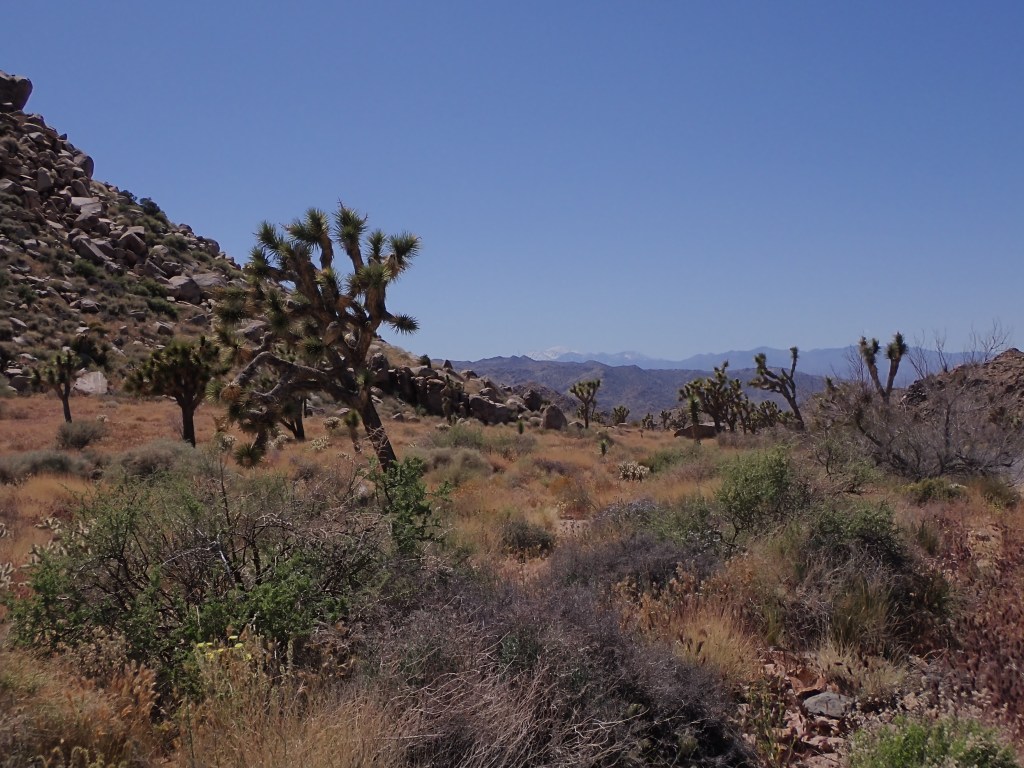
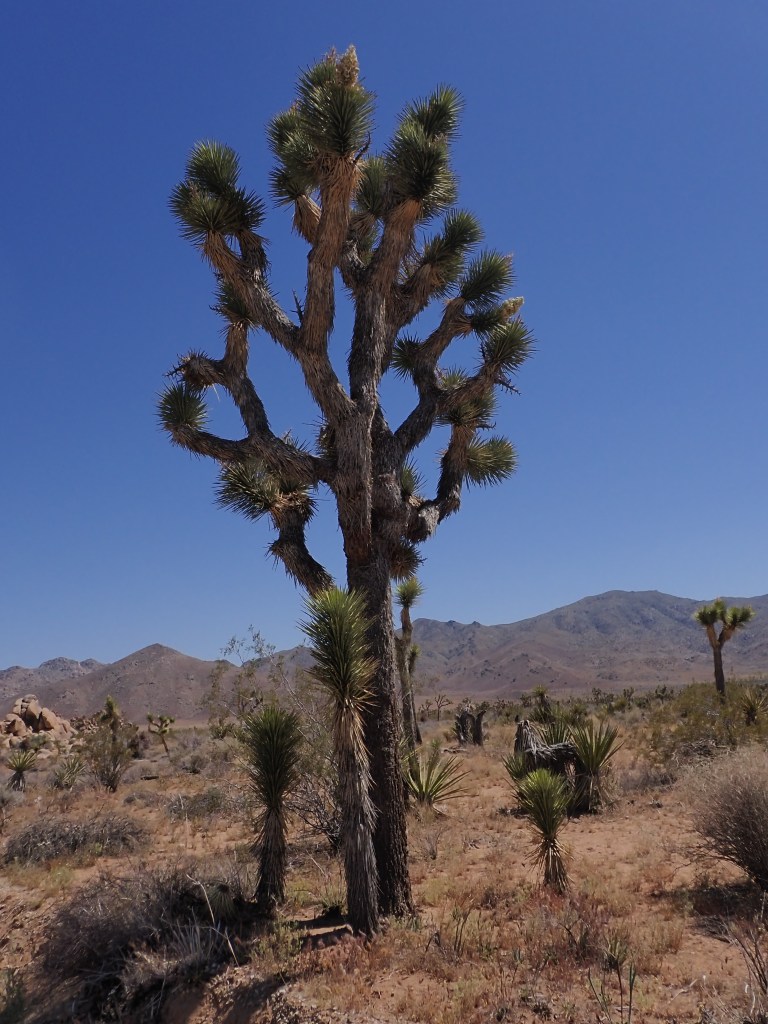
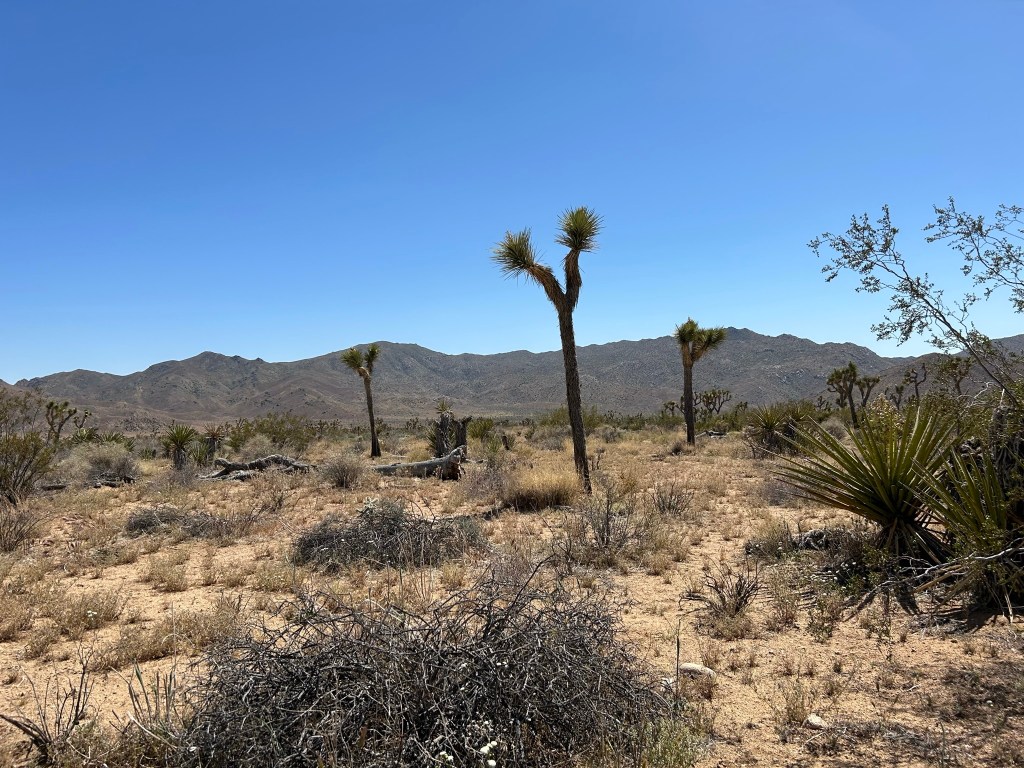
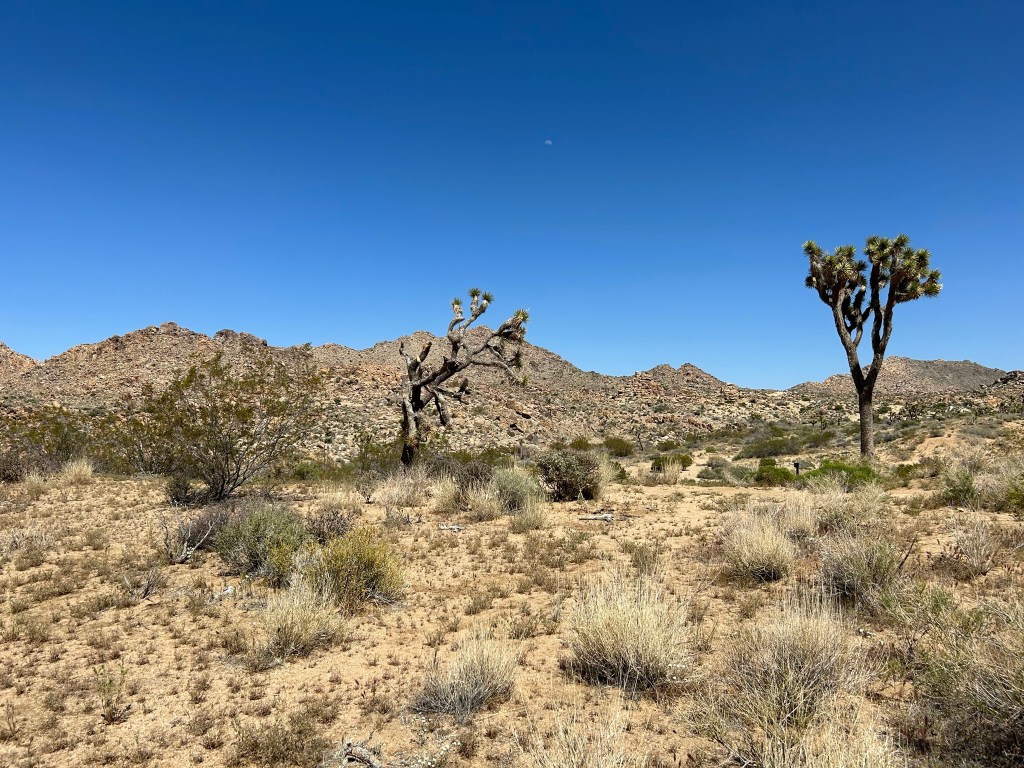
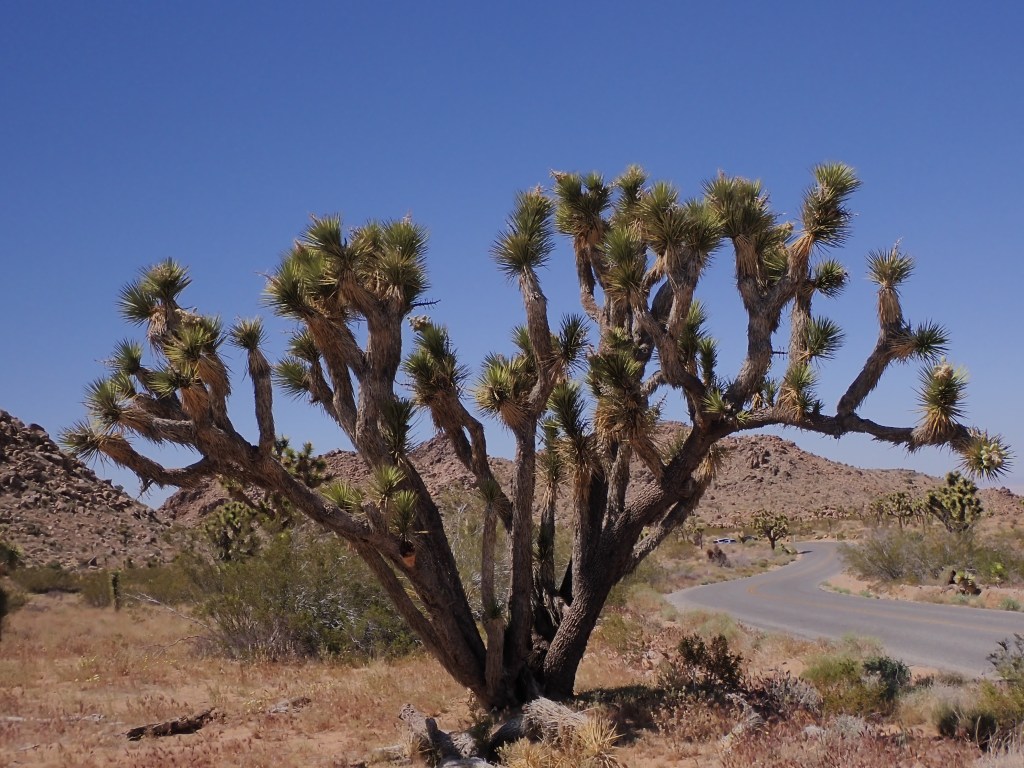
Sitting where Mojave and Colorado Deserts meet, about 130 miles east of Los Angeles and 40 miles North of Palm Springs in southeastern California, lies Joshua Tree National Park. Sitting on 795, 156 acres (1, 242.4 sq. miles), Joshua Tree National Park is slightly larger than the state of Rhode Island. The park is named for the most prominent tree in the park, the Joshua Tree (Yucca brevifolia).
Legend says Mormon migrants crossing the Colorado River in the mid 19th century named the tree after seeing the biblical figure Joshua and the outstretched limbs help guide the travelers west. However, this is only legend and unconfirmed. Other stories suggest the tree inspired thoughts of Joshua and the ability to survive in the harsh desert climate showed toughness, much like Joshua in the bible. The most distinctive feature of the Joshua Tree is the blade-like thorns that will definitely injure any hiker, climber or park visitor. These thorn-like leaves are also coated in a waxy substance that help reduce wilting and water loss. The tree is also evolved to horde water for long periods of time. It’s these evolutionary features that make the Joshua Tree perfect for surviving in the desert. Determining the age of the tree is quite challenging since this species does not have growth rings. However, some believe the Joshua Tree can live more than 150 years and older trees can grow to over 40ft in height. Smaller trees have a hard time surviving because they do not have the branches or thorns that help protect them in droughts. This means as small shrubs, their survive is dependent on well timed rains until they tree is big enough to survive with very little water. Outside the Mojave Desert, the Joshua Tree is also found in parts of Utah, Nevada, Arizona.
Although it’s the most notable feature of the park, the Joshua tree is just one attraction. Throughout the park and mostly visible in the distance, are the Little San Bernadino Mountains. Located in the southwestern section of the park, these mountains are popular for rock climbers and hikers alike. Carbon dating has determined that some of these rocks on Cottonwood, Pinto and Eagle mountains are 1.7 billion years old (for reference, the Earth is 4.6 billion years old). Between 250 and 75 million years ago, tectonic activity forced volcanic material to the surface where it cooled to form monzogranite. As groundwater eroded the monzogranite creating rounded edges, flash floods washed away the covering ground, leaving large rounded boulders at the base of some mountain ranges.
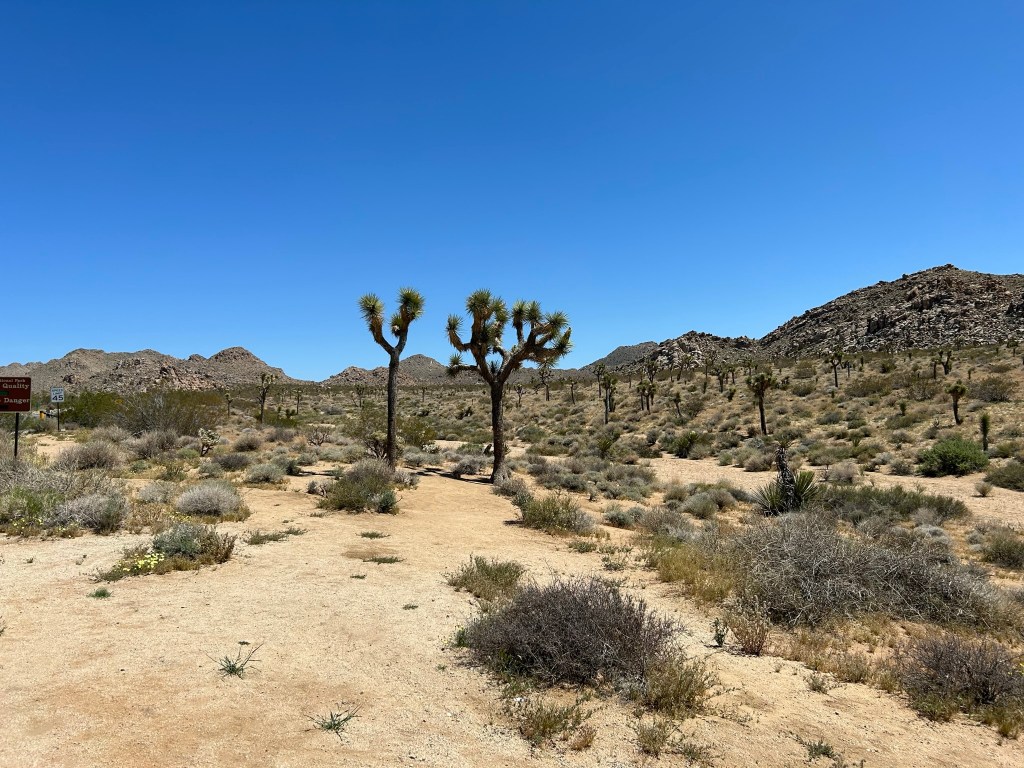
The park also has 9 established campgrounds and are mostly first come first serve. Two campsites (Black Rock Campground and Cottonwood Campground) offer water and flush toilets. Hiking is also permitted throughout the park. One of the shorter and easier hikes is called Hidden Valley. This 1 mile loop is not pet friendly (pets are not allowed anywhere in the park), but very popular among visitors. The trailhead is just off the paved road (Park Boulevard) and gives a great tour of both the desert and rock formations. Other easy trails include the Indian Cove Nature Trail (0.6 mile loop) and Cholla Cactus Garden (0.2 mile loop). If you are looking for a challenging hike, Ryan Mountain will take your breath away. This ~3 mile out and back trail takes you to the summit of the 5, 456ft mountain. This trail is very popular, among visitors. The trail starts out flat, but quickly gains elevation. Alltrails reports the elevation gain as 1,062ft, making this trail one of the most challenging in the park. However, the view at the top is unlike any other, proving a panoramic view of the park. The park is also a great place for armature astronomers and star gazers to make the once in a lifetime observation. At night there is very little light pollution and the calm desert air means there is almost nothing to stop you from making that once in a lifetime discovery.
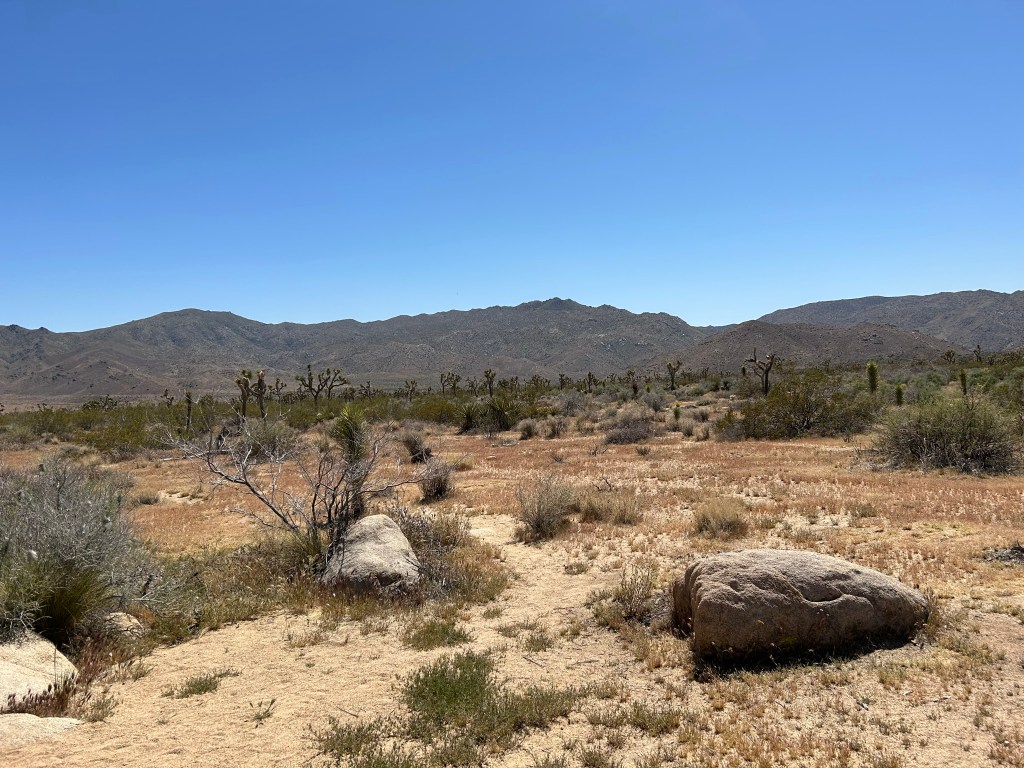
Joshua Tree National Park is unlike any other national park. The yucca trees dot the desert landscape for a truly awe-inspiring site. Desert mountains shine in the distant foreground while snowcapped mountains glimmer in the distance. If you are ever in Southern California, make this park a stopping point. Just remember you are visiting the desert. Water is scarce and an easy hike can quickly turn dangerous! In warm months, plan to drink 2-3 gallons of water a day (per person) to stay hydrated. The flat featureless landscape makes judging distance to objects or landmarks quite challenging. It is hard to tell if something is 10ft, 100ft, or a mile away. This makes it very easy to stray off trail or away from the road. Always be smart and use the buddy system when visiting the park. Remember, going out is optional, coming back is mandatory!
Parking: Parking depends on what trail and region of the park you plan to visit.
AllTrails: Search Joshua Tree National Park to see the various trails. Trail maps are also available at the visitor centers located around the park (Visitor center I attended was located at 6554 Park Boulevard, Joshua Tree, CA 92252).
 Off The Trails: A Hiker's Guide to the Outdoors
Leave a comment